Perinatal grief and the social world of objects: (re)ordering the past, the present and the future10/21/2018
Presented by Paul Cassidy, BBS MPhil
Measurable Learning Objectives:
At the conclusion of this presentation, participants should be able to… 1. Describe the role objects play in perinatal bereavement 2. Restate how new objects are strongly related to meaning focused on the future
ABOUT THE PRESENTER:
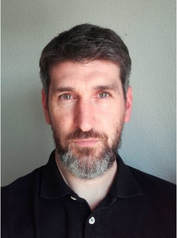
Paul Cassidy, BBS MPhil
Paul Cassidy BBS MPhil is a Researcher at Umamanita (stillbirth and neonatal death charity) and a PhD student in Sociology and Social Anthropology at the University Complutense of Madrid, where he also completed a Master’s Degree in Research Methodology in Social Science (2014). He holds a degree in Business Studies from Waterford Institute of Technology (1995), where he lectured from 1995 to 1997, before working in private consulting on large-scale surveys, strategic development plans and community consultation processes (NGM, 1996-2003). He is the lead researcher on the first national study of perinatal bereavement care in Spain and principal author if the “Informe Umamanita” report. His other interests include medical sociology, the social organisation of grief and the materialities of bereavement. He is a published author and has contributed to the research work of the International Stillbirth Alliance and is the editor of the magazine Muerte y Duelo Perinatal. He is a member of the organising and scientific committees for the International Stillbirth Allie’s annual conference in Madrid in 2019.
Paul
10/22/2018 10:55:05 pm
Hi all, delighted to be taking part in this symposium, would love to hear some comments or any questions, Paul.
Amy Megan
10/23/2018 07:24:11 am
I really liked the explanation of how people expand the material world like the woman who made shamrocks. I am part of a few pregnancy related facebook groups and I've noticed a few women who've had a loss do this and then incorporate it as a symbol of a facebook support group they'll create, highlighting the social dimension you noted. While the facebook groups might just be outlier situations, do you think that the mothers using the symbols helps empower them through the grieving process as it becomes something they hold onto and share with others or is it just a way for them to cope?
Paul Cassidy
10/23/2018 12:16:14 pm
Hi Amy, thanks so much for your comment, you raise some interesting questions, I'll try my best to answer. I think that any public effort to support other parents or raise awareness of perinatal grief that uses an object or image associated with a parent’s own child acts to do a number of things. Symbolically, it would seem to act to establish a social presence for the child beyond the home and therefore could be seen as a form of social validation or public recognition of the loss, but it could also be considered as parents fulfilling their social role/identity as parents in relation to their child, feelings of pride, public display etc., that are important in our society. I haven't studied digital objects/images in facebook, but some other researchers have, and I think that they are probably far from being outliers. They seem to fulfill similar functions as other objects/materialities in relation to establishing a social presence for the the dead child, except that the possibilities of reaching a wider audience and connecting with people who can empathise is somewhat greater than in the more micro contexts that I study. I think objects are important because they provide a resource or medium through which parents can converse, build stories and share their grief, thereby not only sustaining their own identities and that of their child, but also trying to understand what has happened and make some sense of it socially and culturally. In doing so I believe that this helps them to cope.
Marti Perhach
10/23/2018 07:50:19 am
Hi, Paul,
Paul Cassidy
10/23/2018 12:17:54 pm
Thank you Marti, delighted to participate. Paul. Comments are closed.
|
Categories
All
|

 RSS Feed
Join the Campaign against GBS Disease in babies! |
CONNECT TO GBSI |