|
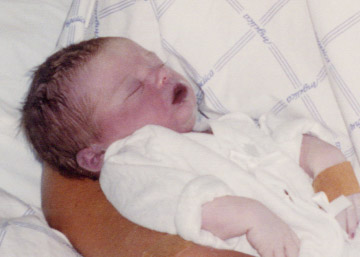
JULIA "ROSE" PERHACH - USA
Stillborn July 1, 1998 Prenatal-onset Mother's GBS Status: Tested positive Gestational Age Harmed: 39 weeks, 3 days Gestational Age Delivered: 39 weeks, 4 days |
My fourth child, Julia "Rose", was stillborn on July 1, 1998 just three days before her due date. After three healthy children I never imagined that this could happen, especially since this pregnancy had been the easiest one for me.
When I cultured positive for group B strep in early June, all four of my obstetricians made GBS seem as if it wasn't anything for me to worry about although they couldn't or wouldn't tell me much about it. (Women should have accurate information to know how to best protect their babies.) I had never heard of group B strep before and, since my baby books at home made no mention of it, I falsely assumed that the doctors must be right.
During the last two weeks in June, I was experiencing external vaginal burning. However, this did not raise any concerns with my OBs. (External vaginal burning can be a symptom of GBS and can indicate high levels of GBS that can potentially harm the baby.) They just prescribed yeast infection medication without actually culturing me even though I complained at subsequent visits that I still had the same symptoms. (Yeast infection medication is not effective against group B strep which is a bacteria.) I again questioned one OB about why I wasn't receiving antibiotics for the GBS now. He said that I would receive IV antibiotics during labor and that it would instantly kill the GBS. (According to the Centers for Disease Control and Prevention (CDC), IV antibiotics generally take four hours prior to birth to be fully effective.)
I had my regular OB checkup at 4:45 PM the afternoon before I delivered Rose. I was so glad to hear her healthy heartbeat, but then the doctor examined me very forcefully to see if I was dilated. During all of my prenatal care, I had never had a doctor bear down on me like that for a cervical exam. Afterwards, the nurse handed me a mini-pad saying that I might bleed a bit. Over an hour later, I told my sister-in-law that I could still feel the forcefulness of his exam. (OB's can strip a woman's membranes during a cervical exam without her prior consent or knowledge of the risks even though the CDC clearly states that GBS can cross intact amniotic membranes. Just common sense indicates that even cervical exams can transport GBS closer to the baby. Studies have shown that the number of vaginal exams increase the rate of infection for the baby.)
The next morning I went into labor at 5:00 AM with contractions 10 minutes apart. (GBS positive women should go to the hospital when labor first starts so that they can start receiving IV antibiotics.) At 5:50 AM my contractions suddenly went to 1-3 minutes apart and I started retching and had the chills. My husband rushed me to our HMO-approved hospital through heavy morning traffic even though there were other hospitals much closer. (Women should have alternate plans in the case of short labors or long distances to the hospital.)
I felt Rose kick me while I was waited in the nurses' station for a room; my request for IV antibiotics was in my hand. However, by the time I got into the labor and delivery room, there was no fetal heartbeat. My membranes were still intact and had to be ruptured before Rose was stillborn just 24 minutes after arriving at the hospital. The only nurse in the room issued a "code pink." She did the best she could until the resuscitation team arrived. At some point after that, one of my four OBs showed up; however, Rose could not be revived. (The OB should be called as soon as the woman goes into labor.)
Autopsy results showed chorioamnionitis (infected amniotic fluid) and pneumonia due to Group B strep. (Subsequent babies are more likely to be infected by GBS if previous siblings have had GBS disease. However, four out of five health professionals advised us to not have an autopsy done as it would most likely not determine the cause of Rose's stillbirth. We decided to at least have a tissue sampling of Rose's heart and lungs cultured. Pathology testing of the placenta can sometimes indicate the cause of stillbirth; however, this was not routine nor suggested in a timely manner to us.)
My OB's did not give me accurate information as to how to help protect my baby from GBS nor any indication that losing my baby was even possible as a result of my being GBS positive.
~ Marti Perhach, USA
Marti cofounded GBSI.
When I cultured positive for group B strep in early June, all four of my obstetricians made GBS seem as if it wasn't anything for me to worry about although they couldn't or wouldn't tell me much about it. (Women should have accurate information to know how to best protect their babies.) I had never heard of group B strep before and, since my baby books at home made no mention of it, I falsely assumed that the doctors must be right.
During the last two weeks in June, I was experiencing external vaginal burning. However, this did not raise any concerns with my OBs. (External vaginal burning can be a symptom of GBS and can indicate high levels of GBS that can potentially harm the baby.) They just prescribed yeast infection medication without actually culturing me even though I complained at subsequent visits that I still had the same symptoms. (Yeast infection medication is not effective against group B strep which is a bacteria.) I again questioned one OB about why I wasn't receiving antibiotics for the GBS now. He said that I would receive IV antibiotics during labor and that it would instantly kill the GBS. (According to the Centers for Disease Control and Prevention (CDC), IV antibiotics generally take four hours prior to birth to be fully effective.)
I had my regular OB checkup at 4:45 PM the afternoon before I delivered Rose. I was so glad to hear her healthy heartbeat, but then the doctor examined me very forcefully to see if I was dilated. During all of my prenatal care, I had never had a doctor bear down on me like that for a cervical exam. Afterwards, the nurse handed me a mini-pad saying that I might bleed a bit. Over an hour later, I told my sister-in-law that I could still feel the forcefulness of his exam. (OB's can strip a woman's membranes during a cervical exam without her prior consent or knowledge of the risks even though the CDC clearly states that GBS can cross intact amniotic membranes. Just common sense indicates that even cervical exams can transport GBS closer to the baby. Studies have shown that the number of vaginal exams increase the rate of infection for the baby.)
The next morning I went into labor at 5:00 AM with contractions 10 minutes apart. (GBS positive women should go to the hospital when labor first starts so that they can start receiving IV antibiotics.) At 5:50 AM my contractions suddenly went to 1-3 minutes apart and I started retching and had the chills. My husband rushed me to our HMO-approved hospital through heavy morning traffic even though there were other hospitals much closer. (Women should have alternate plans in the case of short labors or long distances to the hospital.)
I felt Rose kick me while I was waited in the nurses' station for a room; my request for IV antibiotics was in my hand. However, by the time I got into the labor and delivery room, there was no fetal heartbeat. My membranes were still intact and had to be ruptured before Rose was stillborn just 24 minutes after arriving at the hospital. The only nurse in the room issued a "code pink." She did the best she could until the resuscitation team arrived. At some point after that, one of my four OBs showed up; however, Rose could not be revived. (The OB should be called as soon as the woman goes into labor.)
Autopsy results showed chorioamnionitis (infected amniotic fluid) and pneumonia due to Group B strep. (Subsequent babies are more likely to be infected by GBS if previous siblings have had GBS disease. However, four out of five health professionals advised us to not have an autopsy done as it would most likely not determine the cause of Rose's stillbirth. We decided to at least have a tissue sampling of Rose's heart and lungs cultured. Pathology testing of the placenta can sometimes indicate the cause of stillbirth; however, this was not routine nor suggested in a timely manner to us.)
My OB's did not give me accurate information as to how to help protect my baby from GBS nor any indication that losing my baby was even possible as a result of my being GBS positive.
~ Marti Perhach, USA
Marti cofounded GBSI.
To learn more about Perinatal & GBS Misconceptions, click HERE.
To learn more about the Signs & Symptoms of Preterm Labor, click HERE.
To learn more about the Signs & Symptoms of GBS Infection, click HERE.
To learn more about Why Membranes Should NOT Be Stripped, click HERE.
To learn more about How to Help Protect Your Baby from Group B Strep (GBS), click HERE.
To learn more about the Signs & Symptoms of Preterm Labor, click HERE.
To learn more about the Signs & Symptoms of GBS Infection, click HERE.
To learn more about Why Membranes Should NOT Be Stripped, click HERE.
To learn more about How to Help Protect Your Baby from Group B Strep (GBS), click HERE.